

Email: info@africam.com
Meet the Rhinos at HESC
September 22nd, 2026
Posted in: The Wild Side
Every year on 22 September, World Rhino Day gives us a chance to celebrate these iconic animals and reflect on the importance of protecting them. For Africam viewers, the HESC Rhino Boma offers a unique opportunity to watch these incredible animals up close, day after day. Made possible through our partnership with the Hoedspruit Endangered Species Centre (HESC) and Explore.org, the camera gives us a window into their daily lives as we watch them grow, interact and go about their routines. Over time, familiar faces emerge, and once you know their stories, spotting them on camera becomes even more special.
Why Rhinos Need Our Protection
There are five rhino species left in the world, all facing conservation challenges. The rhinos we see at HESC are white rhinos (Ceratotherium simum), which are currently classified as Near Threatened on the IUCN Red List.
White rhinos have made an incredible recovery from historic population declines, but that success remains fragile. Poaching continues to be their biggest threat, driven by the illegal demand for rhino horn.
And the impact of poaching extends beyond the animals that are killed. Young calves can be left orphaned, unable to survive without intervention and specialised care.
That’s where conservation centres such as HESC play an important role.
HESC: Giving Rhinos a Second Chance
The Hoedspruit Endangered Species Centre (HESC) has been involved in wildlife conservation since 1990. Today, their work includes conservation, research, environmental education and the rehabilitation of wildlife in need, with a particular focus on rhinos affected by poaching.
HESC works to give rescued and orphaned rhinos the care they need to grow and, where possible, return to the wild. The centre has reported rehabilitating 13 rhinos and releasing 10 back into the wild.
Through our live camera at the HESC Rhino Boma, Africam viewers get a unique opportunity to follow some of these animals as they grow and recover.
And while telling them apart isn’t always easy on camera, there are a few clues that can help!
Meet the Rhinos of HESC
Esmé
Esmé arrived at HESC in 2017 at just one month old. She was already malnourished because her mother couldn’t produce enough milk, so she was given bottle feeds every three hours. She grew into a healthy young rhino and formed special bonds with other young rhinos, including Mielie and Dawid.
How to spot her: Esmé is the biggest female in the crash. If you saw her in person, she would probably be the first one approaching the vehicle looking for attention!
Thaba
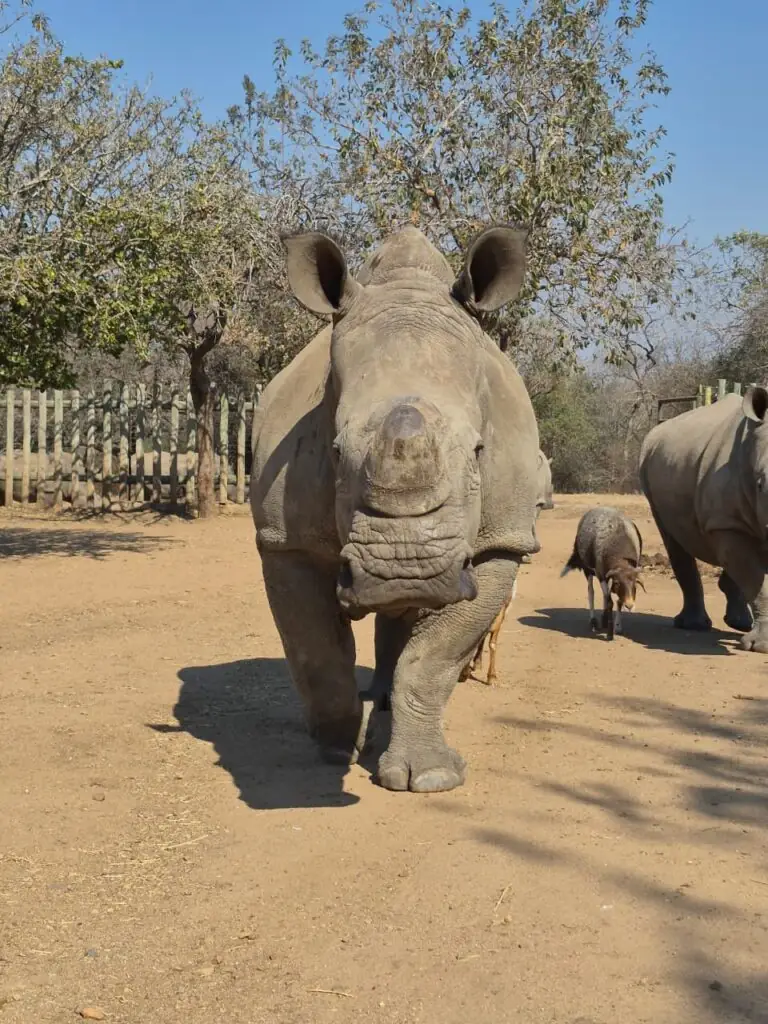
Thaba was around three months old when his mother was killed by poachers in 2022. He was flown to HESC with the help of The Bateleurs and received round-the-clock care and regular milk feeds. He eventually thrived and was introduced to Esmé as the first surrogate calf of the current crash.
How to spot him: Thaba is the biggest bull, and his large horn has a distinctive dip.
Mango
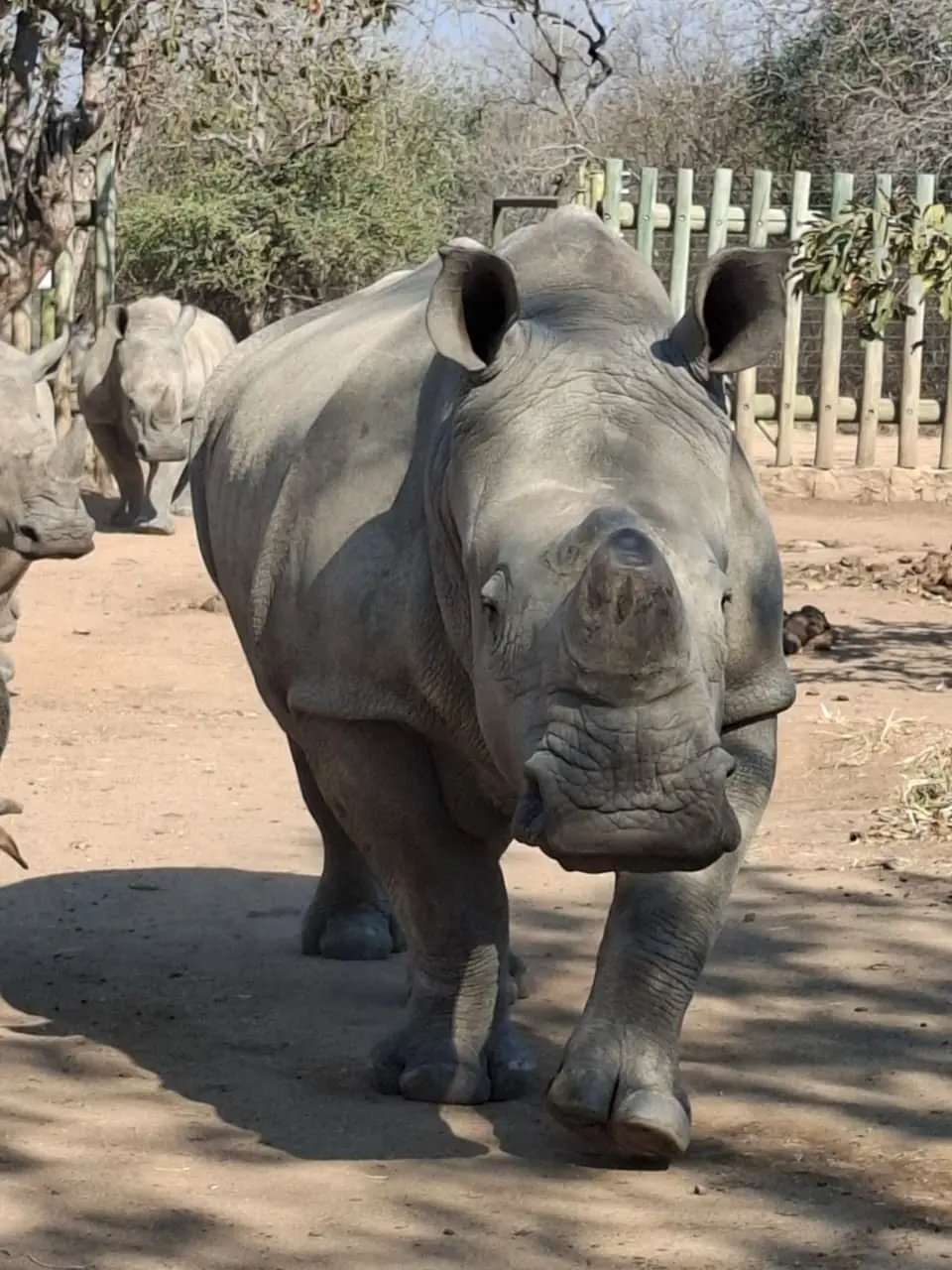
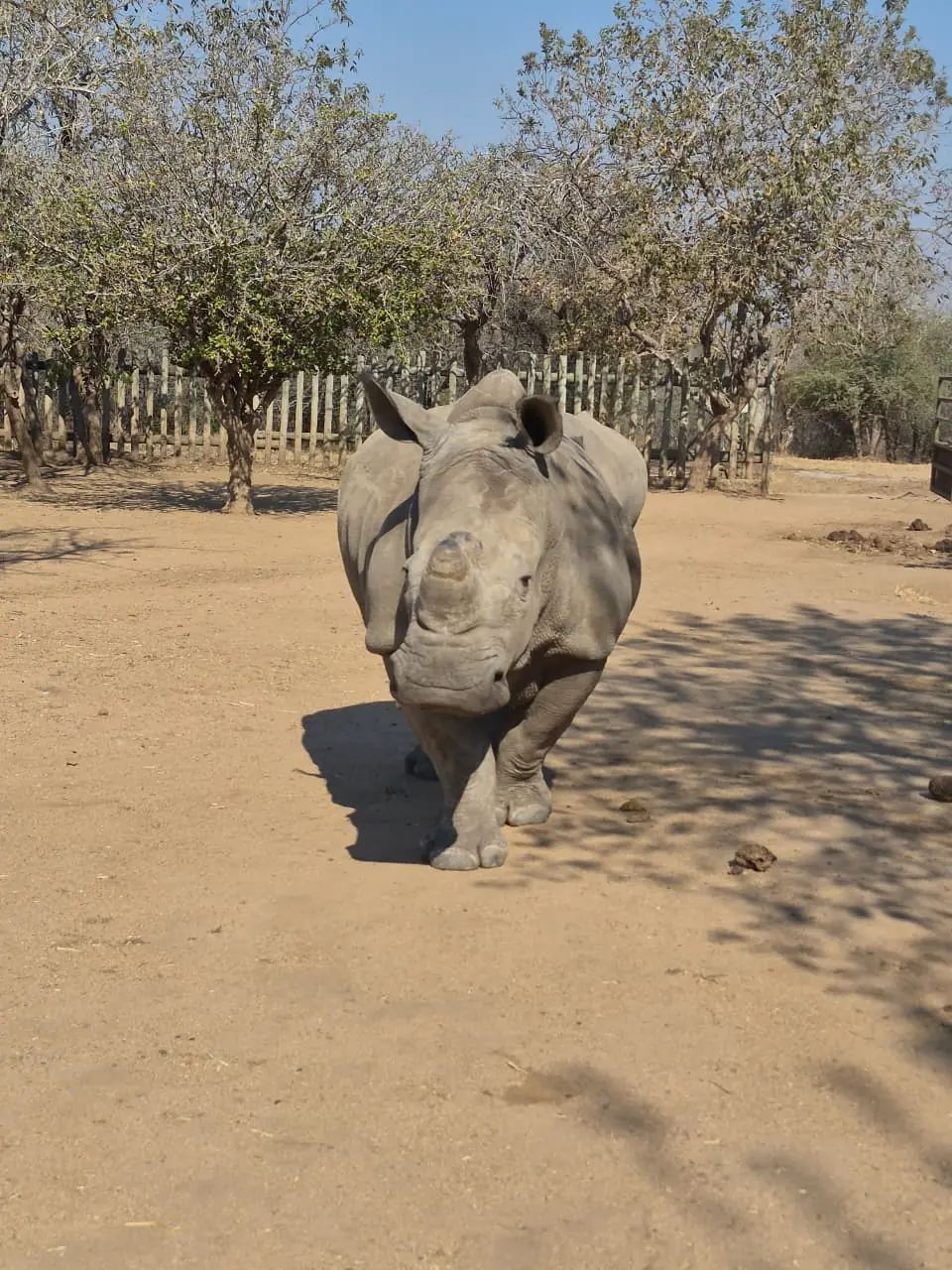
Mango arrived at HESC in 2023 at around nine months old. Because she was older and quite wild, getting her onto bottle feeds was challenging, but with veterinary support she was successfully raised on supplemented feeds.
How to spot her: Look for the small cut in her left ear.
Bula
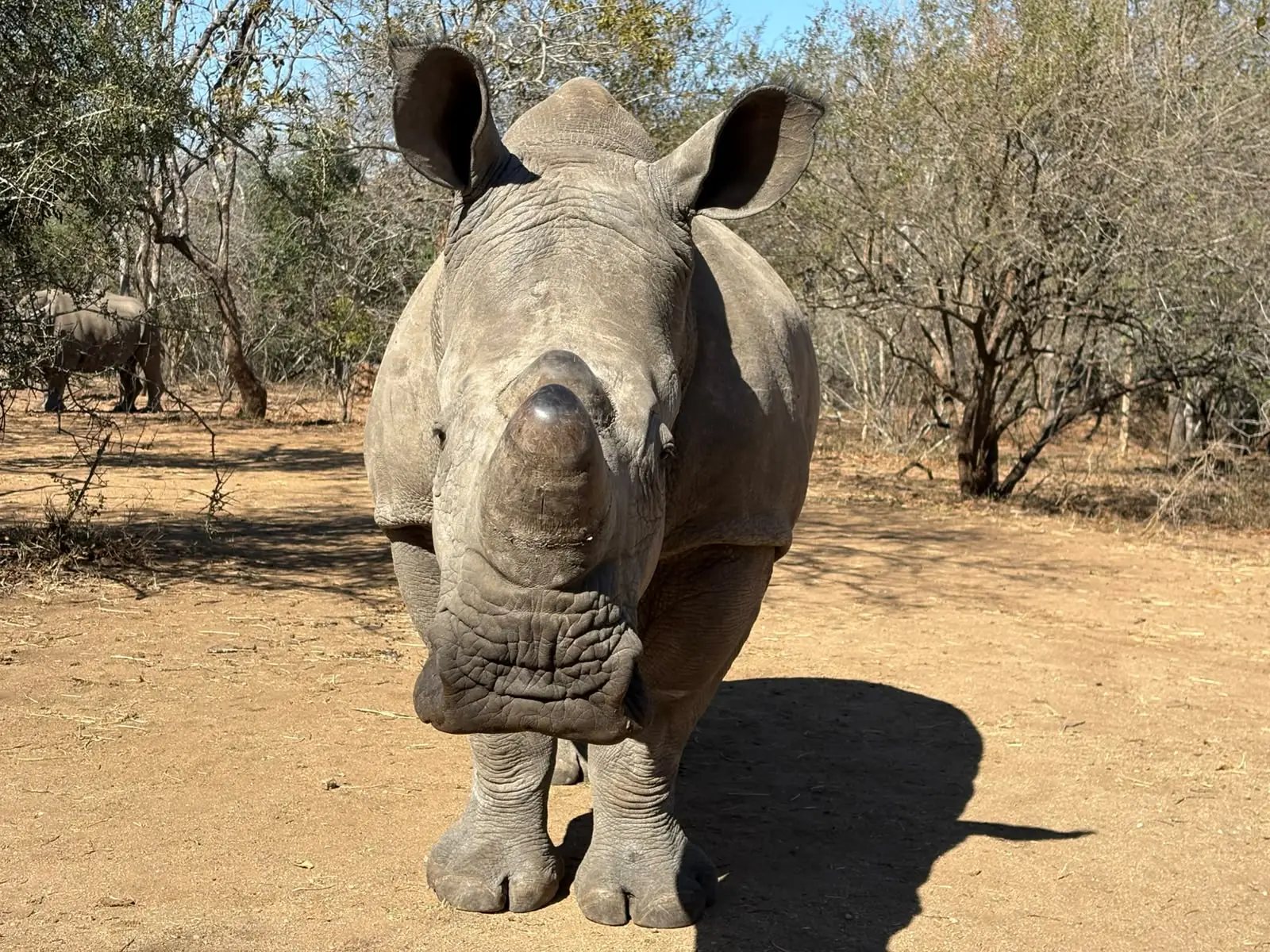
Bula arrived in 2023 with the help of Saving The Survivors. He was around seven months old and needed intervention because his elderly mother could no longer produce enough milk. Sadly, she passed away shortly afterwards. After spending time in quarantine, Bula was introduced to the other rhinos.
How to spot him: Bula is about the same size as Peter, but has slightly less hair on his tail.
Peter
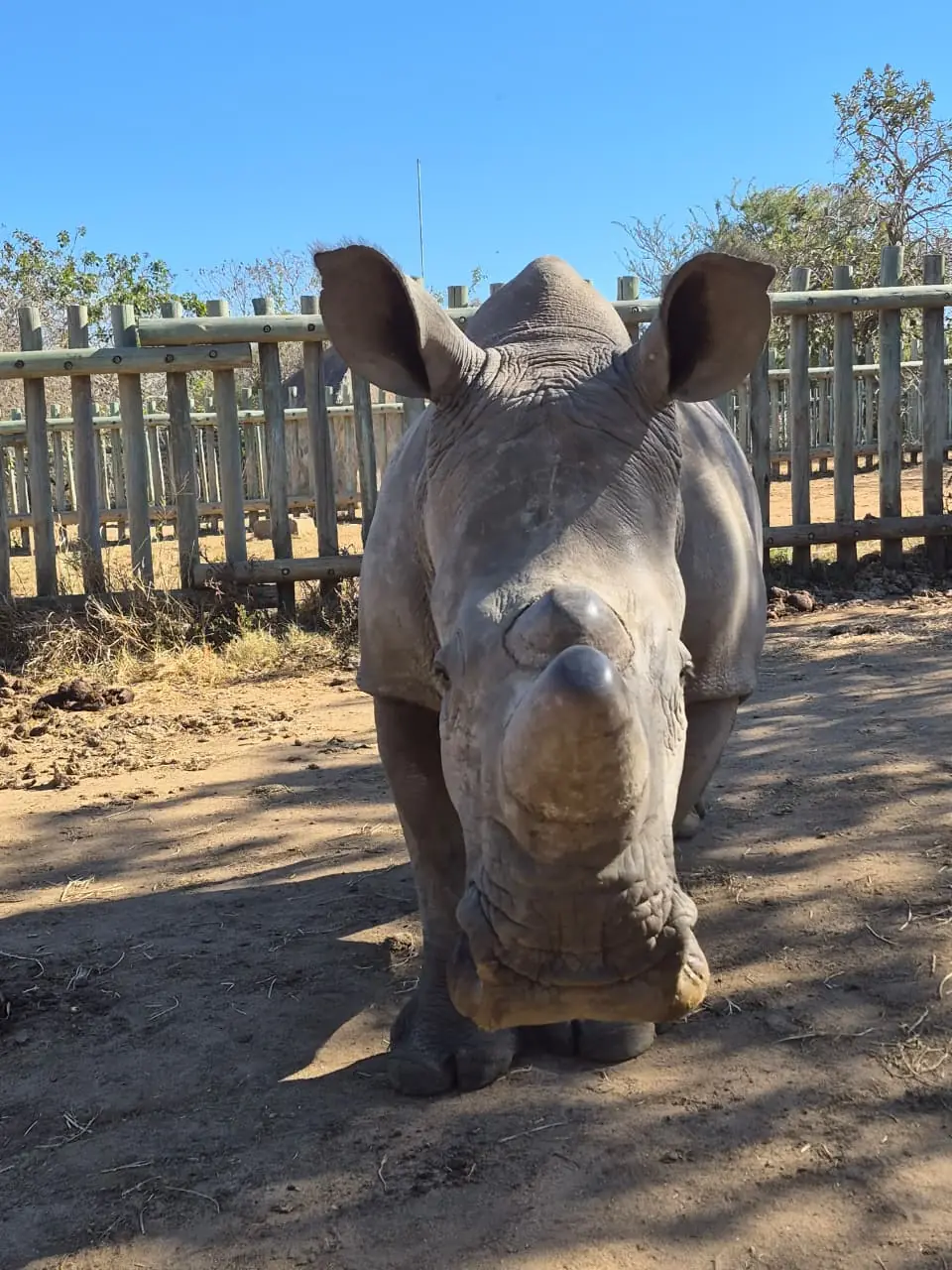
Peter was around four months old when he was orphaned after his mother was believed to have been killed by an elephant. When he arrived at HESC in 2023, he was initially very skittish, but gradually settled with the help of his carers. He was first introduced to Bula before joining the larger crash.
How to spot him: Peter is similar in size to Bula, but his tail has all its hair intact.
Eve
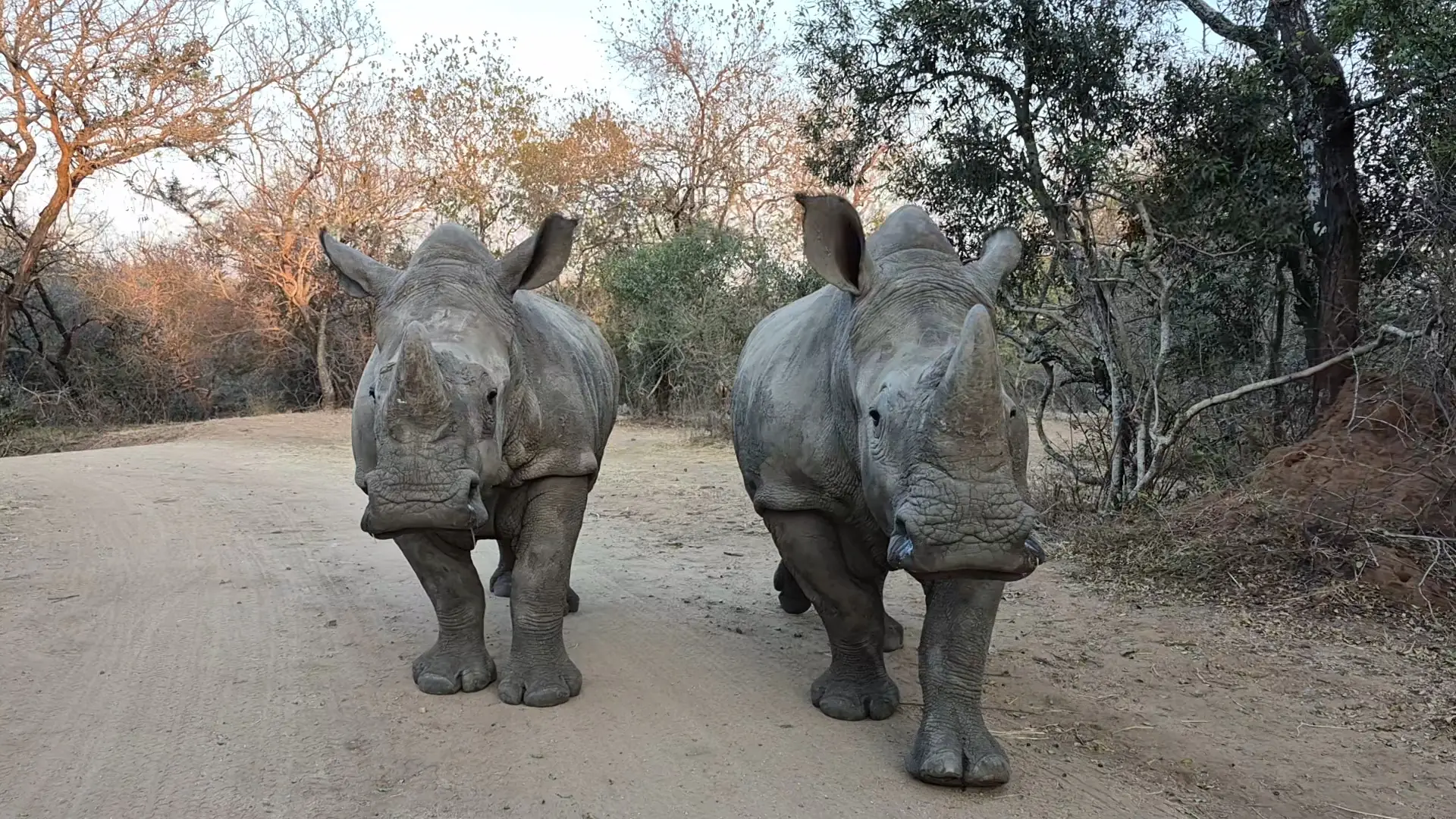
Eve arrived at HESC on Christmas Eve in 2024, which is how she got her name. She was found alone and being chased away by a rhino bull. After several unsuccessful attempts to locate her mother, she was brought to HESC. She initially shared a boma with Angie so they could get used to seeing and smelling the other rhinos before eventually joining the crash.
How to spot her: Eve hasn’t been dehorned yet either, but her horn is slightly shorter and straighter than Angie’s.
Angie
Angie was discovered in 2024 wandering around the body of her mother, who had been killed by poachers. Reserve staff gently coaxed her away before she was transported to HESC. She bonded closely with her carers and Liquorice the sheep, who became her companion. After quarantine, she was introduced to the other rhinos and initially stayed close to Esmé before becoming more independent.
How to spot her: Angie hasn’t been dehorned yet, so her horn is quite long and has a noticeable curve.
Get to Know Your HESC Rhinos
Identifying the HESC rhinos on camera isn’t always easy. They can be lying down, standing behind one another or simply giving us their best “rear end only” view!
But the more you watch, the easier it becomes to recognise the individuals. Look out for differences in size, horns, ears and tails, and see if you can match the rhino to their identifying markers.
This World Rhino Day, when you spot one of the HESC rhinos on camera, remember that you’re not just watching a rhino, you’re watching an individual that has overcome their own challenges and been given a second chance.
Happy World Rhino Day from all of us at Africam! 🦏